
This story is sponsored by Epilepsy Wellness Advocates and The Charles L. Shor Epilepsy Opportunity Fund
 Managing Stress with Epilepsy
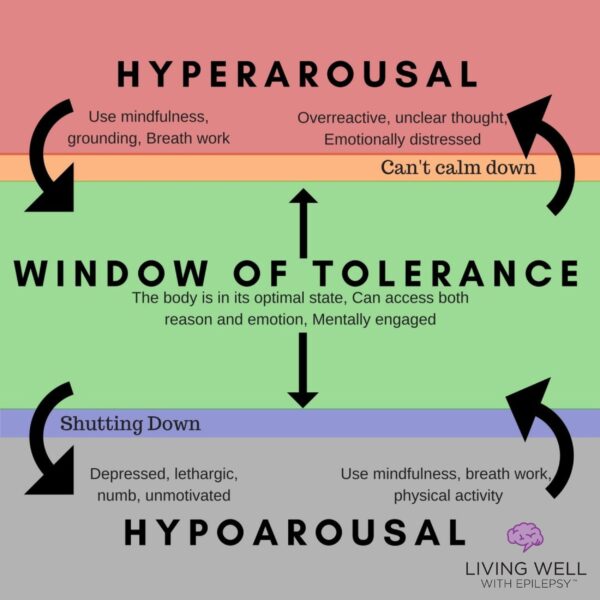
We know that epilepsy shapes daily routines, emotional resilience, relationships, our sense of control and defines how we manage stress. For many people living with epilepsy, managing stress, uncertainty, and the pressure to “keep going” can narrow the Window of Tolerance—the zone where we feel capable, grounded, and able to manage life’s demands. Once we slip above or below this window, our bodies may shift into hyperarousal (anxiety, panic, irritability) or hypoarousal (shutdown, exhaustion, numbness). One tool that can help with this is a gratitude practice.
Share your opinion
Anyone who has participated in epilepsy coaching with me has heard about the window of tolerance. But just in case this is new to you, I’ve included a diagram here.
Try Gratitude, I Swear
Integrating gratitude into a daily routine may seem dumb, simple, even overly positive at first glance. And you are not wrong, initially. You sort of have to convince yourself to give it a try. However, the reality is that gratitude is a powerful, evidence-informed tool that can widen or restore our Window of Tolerance, especially when combined with Dialectical Behavior Therapy (DBT) skills.
I promise it is far from the toxic positivity it appears. Gratitude, if it becomes a practice, can help reclaim small moments of stability, soothe the nervous system, and strengthen a sense of agency in the face of chronic uncertainty. Which, frankly is exactly what life is like when living with epilepsy.
Gratitude and Managing Stress
Living with epilepsy often involves unpredictability—seizures may interrupt plans, medication side effects can disrupt mood or cognition, and the constant awareness of risk can be exhausting. Gratitude does not erase difficulty, but it gently balances the mind’s bias toward threat by increasing awareness of moments of safety, connection, and support. These moments help the brain shift out of survival mode and back toward regulation.
Regular gratitude practices have been shown to:
- Reduce perceived stress
- Improve sleep quality
- Strengthen emotional resilience
- increase feelings of connectedness
- Improve mood and reduce symptoms of anxiety and depression
All of these support epilepsy management, especially for those who experience seizures triggered by stress, sleep disruptions, or emotional overwhelm.
Gratitude and Mindfulness
Mindful gratitude helps redirect attention toward the present moment without judgment. When someone living with epilepsy is caught in fear of the next seizure or frustration with side effects, intentional gratitude helps anchor the mind in what is going well right now, even if it’s small. This gentle focus lowers emotional intensity and supports coming back into the Window of Tolerance.
Gratitude Practices for People Living With Epilepsy
These practices are accessible whether someone is newly diagnosed, managing medication side effects, or living with uncontrolled seizures.
- Three Things Gratitude
Write or speak three things you are grateful for right now, no matter how small:
* “I’m grateful that the morning was calm.”
* “I’m grateful my medication reminder went off.”
* “I’m grateful for a friend who checked in today.” - Body-Based Gratitude
Notice one thing your body did for you today:
* “My legs carried me to the kitchen.”
* “My breath stayed steady.”
* “My brain helped me solve a problem.”
This can be powerful for those who feel betrayed by their bodies - Gratitude Pauses
When you feel overwhelmed:
* Stop
* Take a breath
* Observe one thing you are grateful for in this moment
* Proceed mindfully
This intervention can help return you to your Window of Tolerance before emotional escalation.
One last note
Gratitude does not deny the challenges of epilepsy or the efforts it takes when managing stress with this disease. However, for many people living with epilepsy, gratitude becomes an anchor: a small, steady habit that makes space for hope, connection, and resilience.











Leave a Reply